TopXHHSLymeInnovation_Dashboards
Team
The Lyme Sentinel team brings together expertise in public health decision modeling, infectious disease mathematics, healthcare systems engineering, rural health, geospatial AI, and spatial network modeling.
 Chaitra Gopalappa, PhD University of Massachusetts Amherst |
 Diego A. Martínez, PhD* Pontificia Universidad Católica de Valparaíso · Johns Hopkins |
 Diana Prieto, PhD* Pontificia Universidad Católica de Valparaíso · Johns Hopkins |
 Alex Viguerie, PhD* University of Urbino |
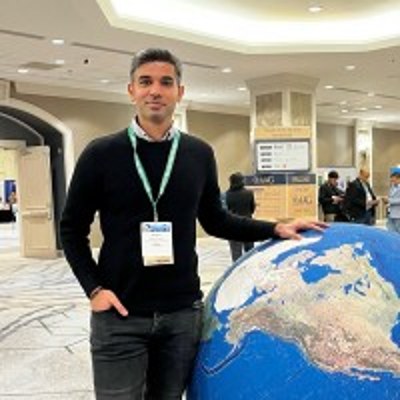 Hashir Tanveer, PhD Worcester Polytechnic Institute |
 Jessica Boakye, PhD University of Massachusetts Amherst |
*Foreign affiliates are U.S. citizens.
Chaitra Gopalappa, PhD
Professor, Mechanical and Industrial Engineering, University of Massachusetts Amherst ✉️ chaitrag@umass.edu · Google Scholar · Lab Website
Chaitra Gopalappa’s research is in areas of AI/ML, simulation, and optimization modeling applied to public health disease prediction and decision support. She has led the development of intervention decision analytic tools for cancers, HIV, and STIs, in collaboration with the U.S. Centers for Disease Control and Prevention (CDC), the World Health Organization (WHO), and the International Agency for Research on Cancer to inform national and global public health strategies and guidelines. She has served as PI on grants from the National Institutes of Health, the National Science Foundation, CDC, and WHO.
Diego A. Martínez, PhD*
Associate Professor of Industrial Engineering, Pontificia Universidad Católica de Valparaíso; Assistant Professor of Medicine and Emergency Medicine (part-time), Johns Hopkins University School of Medicine ✉️ diego.martinez.c@pucv.cl
Diego Martínez brings healthcare systems engineering expertise and a record of rapidly translating analytics into deployed decision-support systems. At Johns Hopkins, he designed and deployed patient-flow dashboards, a daily hospital equipment redistribution tool, and an EHR-embedded emergency department triage algorithm that replaced traditional nurse-led triage (1, 2, 3). He also co-developed the COVID-19 Hospital Capacity Management dashboard for hospital capacity planning and patient redistribution during COVID-19 surges (paper). His work spans operations research, AI/ML, patient flow optimization, infection control, and health equity, with projects funded by CDC/NCEZID, AHRQ, and NIH/NIMHD. For Lyme Sentinel, this experience directly supports rapid six-month MVP delivery of an open-data, county-level decision-support dashboard.
Diana Prieto, PhD*
Associate Professor of Industrial Engineering, Pontificia Universidad Católica de Valparaíso; Assistant Professor by Courtesy, Johns Hopkins Carey Business School, Baltimore, Maryland ✉️ diana.prieto@pucv.cl · Google Scholar
Diana Prieto develops computational models of population health systems to support decision-making in infectious disease monitoring and care service network management. Her work with rural health systems, marked by limited data availability and structural care gaps, has focused on building culturally and contextually grounded tools to support the prioritization of patients in need of health and caregiving services. Grounded in this rural health background, she will contribute to the interpretation of Lyme Sentinel’s findings to support validation of the prototype. Her research has been funded by the National Science Foundation.
Alex Viguerie, PhD*
Assistant Professor of Mathematics, University of Urbino ✉️ alexander.viguerie@uniurb.it · Google Scholar
Alex Viguerie is an assistant professor of mathematics at the University of Urbino. His research focuses on the development of numerical and data-driven methods for problems in the life and social sciences, with infectious and chronic disease being an area of particular interest. Of particular relevance to the present, Alex has worked significantly on partial differential equation-based models of infectious disease transmission, developing models that incorporate local spatial heterogeneity to better represent the relevant dynamics. Alex worked as a research scientist at the U.S. Centers for Disease Control and Prevention (CDC), and has collaborated with public health agencies in Italy and Brazil. Alex is a board member of the Italian Mathematical Union’s group on socio-epidemiological modeling.
Hashir Tanveer, PhD
Postdoctoral Fellow, The Business School, Worcester Polytechnic Institute ✉️ htanveer@wpi.edu · Google Scholar
Hashir Tanveer has 7 years of research experience in geospatial artificial intelligence (GeoAI), GIScience, remote sensing, optimization, and spatial decision-support systems. His research focuses on integrating heterogeneous geospatial, environmental, demographic, and remotely sensed datasets to develop predictive models, geospatial decision-support frameworks, and interactive GIS visualization tools for complex real-world problems. His prior work has applied machine learning, satellite imagery, spatial optimization, network analysis, and web-based geospatial analytics to challenges including illicit supply chain mapping, environmental monitoring, spatial network analysis, object detection, and spatial risk assessment. His research has been supported through National Science Foundation (NSF) and NASA-funded projects.
Jessica Boakye, PhD
Assistant Professor of Civil and Environmental Engineering, University of Massachusetts Amherst ✉️ jboakye@umass.edu · Google Scholar
Jessica Boakye has extensive research experience on risk analysis, geospatial network modeling, and metric development. Her research has integrated publicly available datasets to create modeling, simulation, and learning environments. She also has extensive experience with transportation networks, GIS platforms and spatial network modeling/visualization.